
Beyond Rapid Prototyping: How Live Iterations Accelerate Medical Device Development
Speed matters in medical device development.
For medical device OEMs and engineering teams, every iteration can bring a product closer to commercialization. But every iteration can also add days or weeks to the development timeline.
That familiar cycle of design, prototype, test and repeat is an important part of product development. But what if the entire process could happen in a matter of hours rather than weeks?
That’s the idea behind live prototyping.
From rapid prototyping to live iterations
Rapid prototyping is a valuable exercise for contract development and manufacturing organizations. By producing physical components earlier in the development process, engineers can test designs, identify challenges and make informed improvements before moving to production.
The biggest bottleneck in medical device development isn't always manufacturing a prototype—it's the time between making one, learning from it, making a decision and making the next one. But there is an opportunity to make that process even more efficient.
Live prototyping collapses those handoffs by putting the customer, engineers and manufacturing capabilities together in the same place. And it is the premise behind XLerator, Elevaris Medical Devices’ live prototyping program.
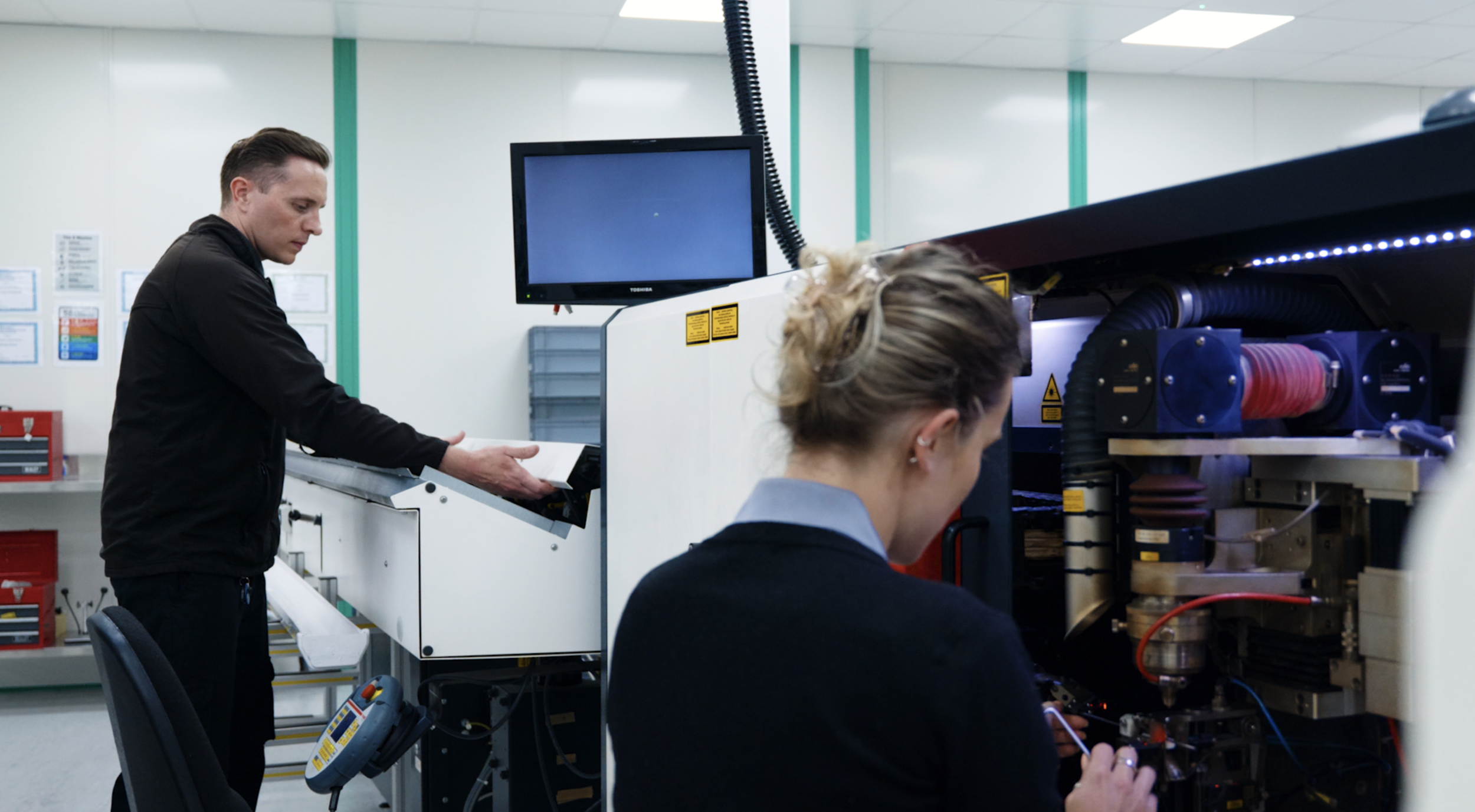
During an XLerator Day, customers work alongside Elevaris engineers and manufacturing professionals on site. The experience brings together project engineers, process development engineers, manufacturing technicians and machine operators, along with access to manufacturing technologies, CAD capabilities and inspection equipment.
Instead of waiting days or weeks for a prototype iteration, teams can evaluate design; identify obstacles, such as performance of parts; discuss changes; and, make adjustments in real time. What normally takes weeks can be reduced to hours. Depending on the complexity of the design and manufacturing process, Elevaris can typically produce four to eight design iterations in a single day.
Why faster learning matters
One of the biggest advantages of live prototyping is the ability to bring design and manufacturing expertise together at the same time, in the same place. Customers gain direct access to the experts and technologies responsible for turning their concepts into manufacturable components. That creates greater visibility into what is possible and what may need to change.
For medical device developers, that can provide several advantages:
Earlier insight into design viability: Direct interaction with engineers can help identify opportunities and constraints earlier in development.
Greater visibility into manufacturing: Seeing processes firsthand can help teams better understand how design decisions affect manufacturability.
Faster iterations based on faster learning: Changes can be translated into new manufacturing programs or process adjustments without waiting for another development cycle. Design changes can be tested immediately.
Reduced development costs: Condensing multiple iterations into a shorter timeframe can reduce the cost of resources required to reach a viable design.
Accelerated time to market: Faster learning and fewer delays can help move promising devices toward commercialization sooner.
The key advantage is not simply speed for speed's sake. It is the ability to make better-informed decisions earlier in the development process.
A real-world example: Solving for flexibility
The value of this approach becomes particularly apparent when a design challenge isn't obvious until engineers begin working with the physical component.
In one particular case, a U.S.-based engineering development company needed assistance addressing flexibility in tubing for a device. The original design incorporated a straight tube. Through collaboration with the Elevaris team, however, engineers identified the need for a more flexible tube size to support manufacturability.
That discovery led to a design adjustment better suited to the requirements of the device—and it happened through direct interaction between the customer and the manufacturing team.
The experience also demonstrated the value of having manufacturing expertise immediately available. The customer specifically highlighted the Elevaris team's engineering knowledge, availability and concierge-like approach, as well as the preparation of samples, responsiveness to changing requests and technical support related to laser cutting and welding equipment. Those capabilities helped streamline the development process by keeping the customer and manufacturing team closely connected throughout the work.
It's a relatively simple example, but it illustrates an important principle: the sooner a development team can identify a design or manufacturing challenge, the sooner it can begin solving it.
Collaboration as a competitive advantage
For medical device developers facing increasingly demanding timelines, the question may no longer be whether rapid prototyping is necessary. It may be whether the traditional approach to rapid prototyping is fast enough.
Live prototyping offers another possibility: Build, test, evaluate, and improve in real time. By bringing engineering expertise, manufacturing technology and customers together under one roof, Elevaris Medical Devices is helping transform the prototyping process into a collaborative development experience.
And the greatest advantage of live prototyping isn’t simply producing more prototypes in less time. It’s giving development teams the opportunity to learn more earlier, when changes are easier and less costly to make. Because when the people who design a device and the people who manufacture its components can work together in real time, the distance between an idea and a manufacturable solution can become much shorter.
Ready to talk? Email us at CONNECT@ELEVARISMEDICAL.COM.